

Vera Akhmetova
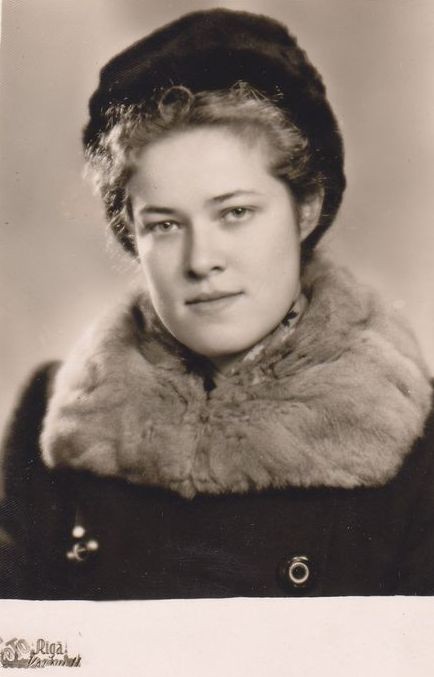
Vera Akhmetova (29th of April 1936, Chita, Russian SFSR – 3rd of November 2021, Riga, Republic of Latvia) – a teacher of English language, principal of Riga 10th Secondary School from 1979 to 1992.
Vera (née Hilshlyain) was born into a military family. Her parents were natives of Ukraine, from Dnipropetrovsk (known as Yekaterinoslav until 1926). Her father, Aleksandr Hilshlyain, before joining the army worked at the Dnipropetrovsk Steel Works. From 1925 to 1927 he had been serving in a company of Kremlin cadets in Moscow; later he served in Transbaikalia on the Chinese Eastern Railway (CER). Prior to that, in 1928, he married Leonila (née Dmitruk, 1911–1990).
Three children were born in the family:
Igor (1929–1975), Vera (1936–2021), and Aleksandr (born 1941).
For more than ten years Vera’s father had been serving in Transbaikalia, including in the city of Chita. In 1940 he was transferred to the Moscow Military District. On the eve of the war, during a parachute jump, he sustained a severe leg fracture, which prevented him from taking part directly in combat operations; nevertheless, he continued to serve in the army in responsible positions.
The outbreak of the war found the family in Tula and left an indelible mark on Vera’s memory. The family subsequently moved to Ryazan Region, then to Sverdlovsk (now Yekaterinburg), and later to Kuybyshev (now Samara), where the head of the family served at the district headquarters. In this city, in 1944, Vera began attending school. After the war, she continued her education in Kyiv and received her secondary school certificate in 1954 in Chkalov (now Orenburg). That same year Vera enrolled in the local Pedagogical Institute, in the Department of Foreign Languages.
In 1955 the family moved to Riga, where Vera continued her studies at the Riga Pedagogical Institute and, after its dissolution, at the Latvian State University, from which she successfully graduated in 1959.
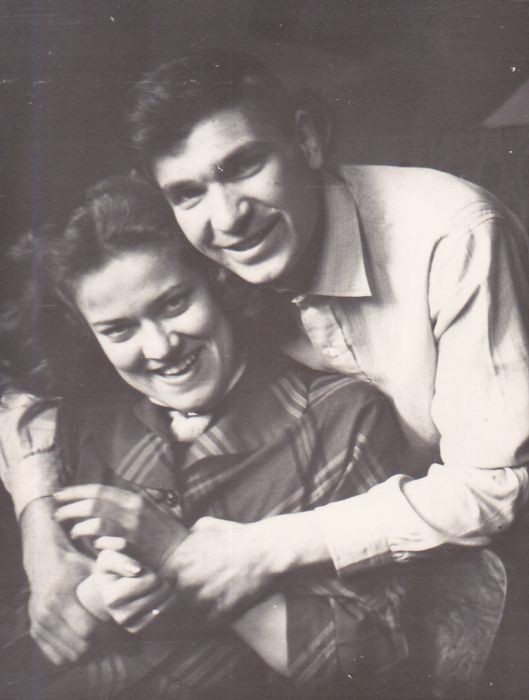
In 1958 Vera married Rafkat Akhmetov, whom she had met earlier in Chkalov in 1955, when he was a cadet at the 2nd Chkalov Aviation School for Navigators.
In 1961 the couple’s son Sergey was born. As of 2015, he has three sons—Aleksandr, Maksim, and Artyom—as well as one grandson, Denis.
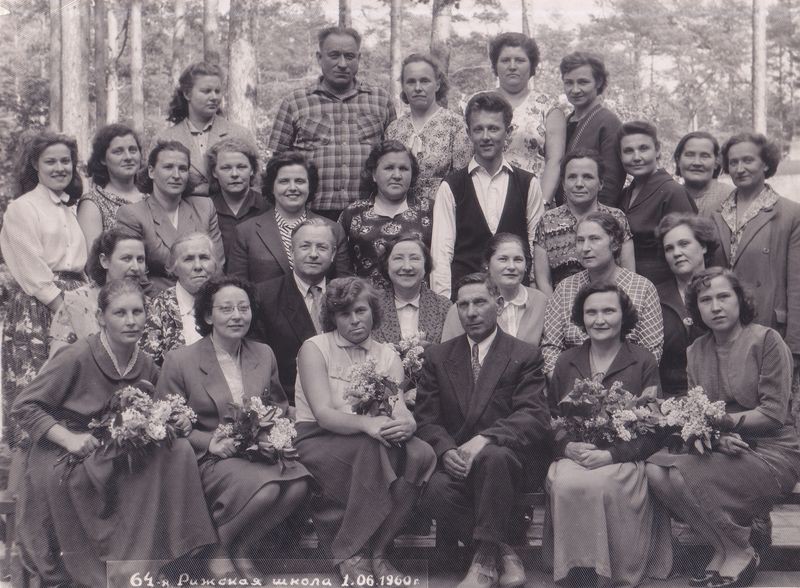
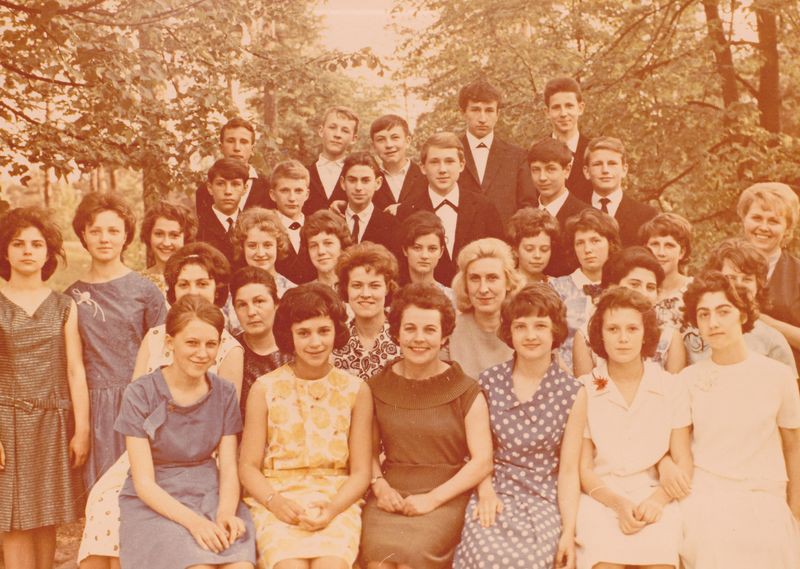
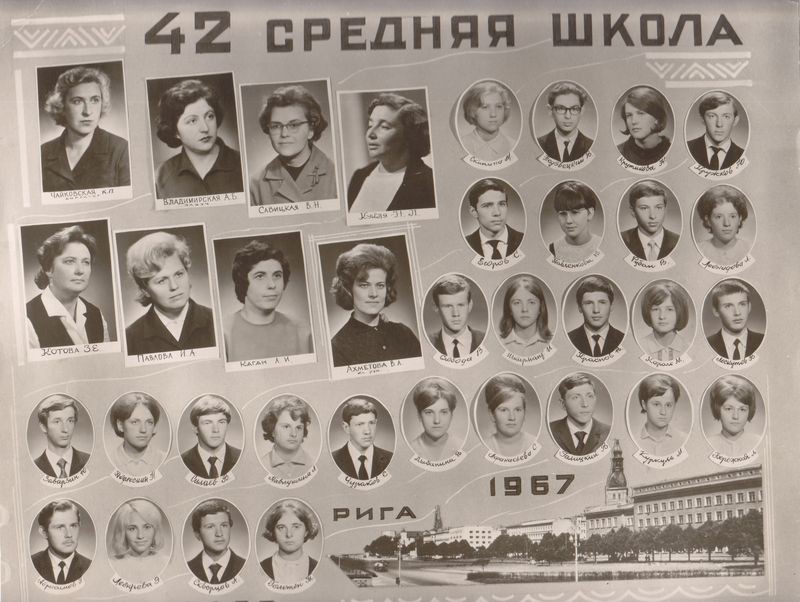
From 1959 to 1963 V. Akhmetova had been working as an English teacher at Riga Secondary School No. 64 (a seven-year school in Mežaparks). In 1963, following the closure of the seven-year school and the establishment of the new Secondary School No. 42 on its basis, she transferred there. She had been working at Secondary School No. 42 from 1963 to 1967, leaving behind a warm memory as an outstanding teacher, an expert in her subject, and a kind and responsive person.
In 1966–1967 she actively participated in receiving foreign students from the United Kingdom who arrived in Riga aboard the liners Devonia and Dunera, working as a guide-interpreter in her free time.
V. Akhmetova left Secondary School No. 42 due to her relocation to Panevėžys (Lithuanian SSR). For eleven years she taught English and German at the Panevėžys Russian Secondary School and was awarded the honorary badge “Excellence in Public Education of the Lithuanian SSR” (1978).
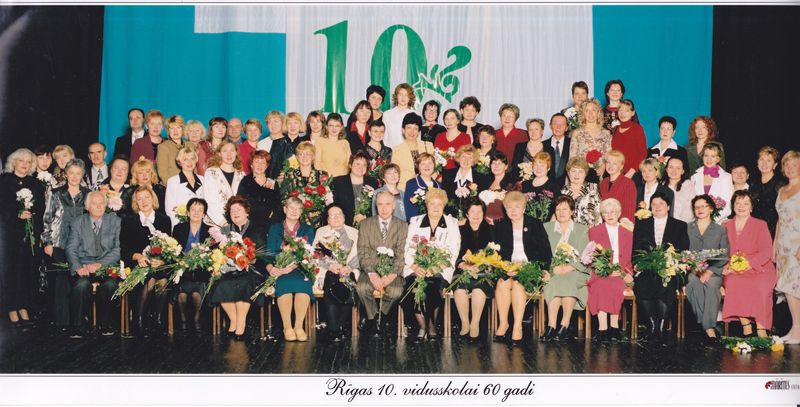
In 1979 the Akhmetov family returned to Riga. That same year Vera was appointed deputy headteacher at Riga Secondary School No. 10, one of the finest schools in Latvia. A year later she was entrusted with leading the school. From 1979 to 1992 she had been serving as principal of Secondary School No. 10. From 1992 until her retirement in 2009, she again had been working as deputy headteacher.
For her professional achievements, V. Akhmetova received numerous Certificates of Honor, the Order of the Badge of Honor (1986), and the Veteran of Labor medal (1984).
Alongside her work at Secondary School No. 10, V. Akhmetova was appointed head of the methodological association of English teachers of Riga’s Northern District (1994–2003).
Vera Akhmetova passed away on 3 November 2021. She was buried at Ulbroka Cemetery (Pļavnieki) in Riga.
Recorded from the words of V. Akhmetova
by Tatjana Feigmane
(June 2015)
Former pupils Alla Minkina and Diana Rudzīte warmly recall Vera Akhmetova:
(See: “For Us, the School Door Is Always Open… Riga Secondary School No. 10. Pages of History: 1944–2014.” Riga, 2014, pp. 60–63.)
“Vera Akhmetova devoted thirty years of her life to our school. She began as a teacher, later became deputy headteacher, and for a long period (1979–1992) had been successfully serving as principal. Later she again worked as deputy headteacher and teacher. Her fruitful pedagogical activity was recognized with government awards of the USSR. With her characteristic modesty, she insists that the widely acknowledged status of the school as one of the most prestigious educational institutions in the city is not her personal achievement but the result of the collective efforts of the entire teaching staff and student body. One can agree with her only in part: it is self-evident that if not everything, then very much depends on the head of an institution.
Above all, the achievements of the graduates—not merely government awards—are the true result of her pedagogical work. Of particular pride is the fact that twenty of her students chose teaching English as their future profession. One of them is Galina Komarova, now a teacher at our school…
In her view, Vera Akhmetova possessed such secrets of pedagogical mastery that helped generations of her students master a foreign language as if it were their native one.
‘She was probably the only person who influenced my choice of profession,’ Galina Komarova admits. ‘She was an example and an idol for me. As her student and later her colleague, I was always impressed by the breadth of her knowledge—world history and culture, linguistics, political science…
As colleagues, we never had informal familiarity, nor could we have. But I could always ask her for advice—not only about my subject, but about life in general. And her opinion always meant a great deal to me.
She perceived her students’ failures very acutely, as her own mistakes, and they deeply upset her. I tried very hard not to let her down.’
Related illustrations