
Baltics and Ancient Rus
Present day Latvia is formed on the lands of the ancient Baltic tribes – the Latgalian, Semigallian, Selonian, the Curonian and the Finno-Ugric Livonian tribe. The medieval names for the territories – Livonia and Courland – were derived from these names. The term Latvia is probably derived from the name of the Latgalian tribe. >>
Latvia Becomes a Home for Russian Old Believers
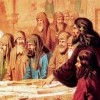
The 17th Century was fateful in the history of the Russian Orthodox Church. On the initiative of Tsar Alexey Mikhailovich and the Patriarch Nikon a reform of the church was begun, which essentially brought about a revision of prayer-books and rites based on Byzantine models, which was supposed to promote the unification of the Orthodox world. It was now necessary to make the sign of the cross with three fingers instead of two, religious processions started to be made towards the sun and not away from it, the spelling of the name Christ was changed, etc. Part of the clergy and the congregation, however, did not support the reforms. >>
The Ostsee Times and Old-Believers
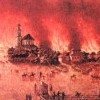
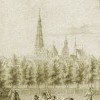
At the end of the 18th and in the first half of the 19th Centuries the lands of present-day Latvia and Estonia were known as the Ostsee area. The origin of this term is German. The ruling powers there were German nobles and merchants. Despite the Ostsee being part of the Russian Empire, Russian legislation was not in force in these Baltic provinces. The official language in the region was German. It was possible to achieve a full education in German only. The Russian Orthodox minority chiefly made up of small tradesmen and workers were not engaged in any independent social activities. It was not uncommon for a few wealthy Orthodox merchants to adopt German culture and send their children to German schools. >>


Latvia Attains Independence
The First World War led to the emergence of a number of new states in Europe. The Republic of Latvia proclaimed its independence on 18 November 1918. The young state was multi-national. Alongside the Latvian majority were several noticeable national minorities – German, Jewish, Polish, Byelorussian and Russian. >>