


Latvia Attains Independence
The First World War led to the emergence of a number of new states in Europe. The Republic of Latvia proclaimed its independence on 18 November 1918. The young state was multi-national. Alongside the Latvian majority were several noticeable national minorities – German, Jewish, Polish, Byelorussian and Russian. >>
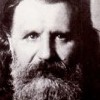
The Latvian Orthodox Churrch in the interwar years
After the formation of the independent Baltic States the eparchy of Riga was divided into two parts – Estonian and Latvian. On 27 February 1920 the All-Latvian Assembly of the Orthodox Church elected John Pommer as the Archbishop of Riga and all Latvia.
>>
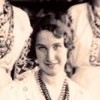
The Russian minority NGOs in the interwar Latvia Latvia
During the first years of Latvian independence in the 1920’s the Russian minority of Latvia (one tenth part of the country’s population) had to put considerable strength into restoring the non-governmental organisations that had existed earlier and creating new ones. >>

Russian Professors and Students of Latvia in 1919 - 1940
At the very beginning of the history of independent Latvia in 1919 the University of Latvia (UL) was set up on the basis of the former Polytechnic of Riga and has become the main centre for scientific and pedagogical specialists, amongst whom a relatively small but important group of Russian academic intelligentsia can be noted. >>

Russian Minority Schools in Interwar Latvia
In December 1919 Latvia’s People’s Council (temporary parliament of the new-born state) passed laws on the educational establishments of Latvia and on the organisation of minority schools in Latvia, according to which national minorities had the right to autonomy in creating and running their schools. Within the Ministry of Education national departments were created, including the Russian Department. >>

Russian minority and the economic life of interwar Latvia
In the 1920’s and 1930’s the economic situation in Latvia differed radically from that at the beginning of the 20th Century. Most of those industrial enterprises that had been evacuated to Russia never returned to Latvia after the First World War. After the war Latvia’s economy could not rely on raw material or the market of Soviet Russia. The industry of independent Latvia was dominated by agriculture as well as medium-sized and small businesses, mainly in food and wood-processing. >>

Old Believers in Independent Latvia
With the foundation of an independent Latvian state in 1918 a new stage in the life of the Old Believers began. In November 1920 the first convention of Old Believers in Latvia was called, at which the Central Committee for the Affairs of Old Believers in Latvia was set up, and the basic principals of the organisation were determined, as well as the activities of the Old Belief communities. >>