
russkije.lv
По-русски
Latviski
In English
  • HOME
  • ABOUT US
  • SCIENCE
  • JOURNALISM
  • MISCELLANY
  • PERSONS
  • GALLERY
  • EXHIBITION
Home page > Topics > The Оrthodox Church
Topics
Historical facts
Baltic-slavs relations
Livonian period
Russians relocation
a Part of Russian Empire
Latvian Republic
World War II
Soviet Latvia
Modern Latvia
Economics
Trade, handicraft
Agriculture
Industry
Businessmen
Politics
Education
Schools
Teachers
Higher education
Scientists
Culture
Literature
Artists
Architecture
Theater
Music
Ballet
Opera
Choirs, Dance Ensembles
Press, radio, TV
Journalists
Social NGO
Religion
The Оrthodox Church
Churches
Priests
Oldbelief
Praying houses
Sport
Persons


Unique Photo

chronology

any

10-12 c.

13-16 c.

17 c.

18 cent.

19 cent.

20 cent.

1901-14

1914-18

1918-40

1940-41

1941-45

1945-90

1991 - ...

10-12 c.
Objects of an Orthodox cult

Objects of an Orthodox cult

Objects of an Orthodox Christian cult >>

Religion > The Оrthodox Church
18 cent.
The Orthodox Church in Latvia from X to XX cnt.

The Orthodox Church in Latvia from X to XX cnt.

The history of the Russian people is allied to the history of the Orthodox Church. The first records of the Orthodox religion in Latvia date back to the tenth century. The famous route ‘from the Varangians to the Greeks’ ran along the Daugava river (the Western Dvina). This was not only a trade route but a road that spread of Christianity. In the eastern regions of present day Latvia Christianity came from the neighbouring lands of Ancient Rus: from Polotsk, Pskov and Novgorod. Data from archaeological excavations as well as written sources bear witness to the presence of Orthodox Christianity on the territory of Latvia before the invasion of the crusaders. There are no historical facts to prove that the spread of the Orthodox faith was violent in character during those times. >>

Persons
1918-40
The Archbishop Johann

The Archbishop Johann

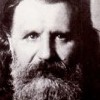
Johann Pommer (Jānis Pommers) (1876-1934) was born in the Prauliena district in a peasant family of Orthodox Latvians. In 1897 he graduated from the Riga Theological College and in 1904 the Kiev Theological Academy. He became a monk in 1903. In 1907 Johann Pommer was appointed rector of the Lithuanian Theological College and Senior Priest of the Monastery of Holy Trinity (Vilnius). In 1911 he became the youngest bishop in Russia. In 1912 Pommer was charged with the authority of the Minsk eparchy (diocese) and in 1915 that of Taganrog. >>

Religion > The Оrthodox Church
1941-45
Orthodox Church during the II World War

Orthodox Church during the II World War

  >>

Religion > The Оrthodox Church
1945-90
Russian Orthodoxy in Latvia from the Post-war Period to the Present-Day

Russian Orthodoxy in Latvia from the Post-war Period to the Present-Day

After Latvia became part of the USSR the Latvian Orthodox Church was returned to the jurisdiction of the Patriarchy of Moscow. Church life entered an uneasy period of fighting for survival in an atheist state. Churches were closed and destroyed. Many clergymen suffered repressions. Part of the congregation abandoned the church, fearing persecution. But even in these difficult circumstances the Orthodox Church continued to bring the light of faith to the people. >>

Religion > The Оrthodox Church
1991 - ...
The Orthodox Church in modern Latvia

The Orthodox Church in modern Latvia

Text is not translated >>

  • HOME
  • ABOUT US
  • PUBLICATIONS
  • GALLERY
  • EXHIBITION

© 2010 – Институт Русского наследия Латвии – Latvijas Krievu kultūras mantojuma institūts

When you use materials from the site "Russians of Latvia", or when you reproduce them on the Internet it is necessary to place interactive link: http://www.russkije.lv