
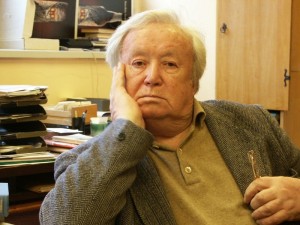
Photos from the albom of Taisiya Repina (1937–2022)


Taisiya Repina (née Trubetskaya; 11th of November 1937, Ogre, Republic of Latvia – 3rd of April 2022, Ogre, Republic of Latvia), a public figure.
Taisiya was born into the family of Father Ioann Trubetskoy (1911–1991), an Orthodox priest, and his wife Militsa (née Pylyai; 1912–1977). Taisiya was the eldest child in the family. Her sister Anastasia was born in 1941, followed by her brother Dimitry in 1948.
Wherever the Trubetskoy family lived, their children were born in Ogre, as Militsa's mother, Aleksandra Pylyai (1885–1971), lived there, as did a midwife who knew her well. Even before the First World War, the Pylyai family had owned a summer house in Ogre. In the 1920s, A. Pylyai built the Oger-Park boarding house, which she successfully ran until 1940.
Taisiya spent her childhood in Latgale. Initially, the family lived in Piedruja (Daugavpils County); from 1941 to 1944, they had been living in Kārsava (Ludza County); and from 1945, in Ludza. In 1948, tragedy struck the family: its head, Father Ioann, was arrested a month after the birth of his son and sentenced to ten years in labour camps. Her father’s arrest was a severe ordeal for Taisiya, who was subjected to various forms of persecution. Nevertheless, she endured these hardships with fortitude, remaining faithful to the principles instilled in her at home.
After completing a seven-year school, she enrolled at the Riga Construction Technical School, graduating successfully in 1954. From then until the early 2000s, she had been living in Riga. She was working at design institutes and later at the A. Popov Riga Radio Factory.
In 1976, Taisiya married Valery Repin in the Orthodox Church. Their son Alexei was born in 1978.
Even during the most difficult years for the Church and believers, when atheism was aggressively promoted, Taisiya remained a faithful Christian. As the daughter of a priest who had himself been subjected to political repression, she faced numerous obstacles that prevented her from fully realising her potential.
As it was for many others, 1988 proved to be a turning point in her life. It was the year marking the millennium of the Baptism of Rus’ and the beginning of the revival of public and church life throughout the USSR, including Latvia.
In 1988, at the initiative of members of the public, the Baltic-Slavic Society for Cultural Development and Cooperation (Baltijas slāvu kultūras attīstības un sadarbības biedrība, BSO) was founded. Taisiya Repina immediately became actively involved in its work. One of the society’s priorities was the revival of traditions lost during the years of Soviet rule. As early as 1988, Vera Bartoshevsky organised the first pilgrimage to the Pühtitsa Dormition Convent. From 1989 onwards, Taisiya organised numerous pilgrimages to Pühtitsa. Her father, Archpriest Ioann, also took part in one of these journeys, in 1990.
Thanks to Taisiya’s efforts, pilgrimages were also organised to the Valaam Monastery, the Pskov-Pechory Monastery and other important sites for Orthodox Christians.
The evenings held in 1988–1992 for the “old” Russian community—graduates of Latvian secondary schools from the interwar period—attracted considerable public attention. Taisiya was the initiator and one of the organisers of these well-attended gatherings. Her sister Anastasia and brother Dimitry, along with friends and acquaintances, worked alongside her.
In 1989, the international historical and educational, human rights and charitable organisation Memorial was founded. A Latvian branch soon followed. The Trubetskoy family became actively involved in its work, particularly in collecting information about clergymen who had been subjected to political repression. At the society’s initiative, an exhibition dedicated to the victims of Stalinist repression was organised. The Trubetskoys prepared a large display featuring the names and photographs of sixty repressed clergymen. The exhibition was held at the Railway Workers’ Club, later the site of the House of Moscow, and attracted a large crowd. A commemorative evening was also held there, with former Gulag prisoners among the speakers.
In the early 1990s, Taisiya Repina became one of the initiators of the construction of an Orthodox church in Ogre. In 2001, the church dedicated to St. Nicholas was consecrated by His Eminence Alexander (Kudryashov), Metropolitan of Riga and All Latvia.
In 2011, she organised a commemorative evening marking the centenary of Father Ioann Trubetskoy’s birth. A memorial service was held at the All Saints Church, where Father Ioann had served as rector for seventeen years. The evening dedicated to his memory took place at the Riga Theological Seminary.
In the early 2000s, Taisiya Repina moved to Ogre, where her parents had lived since 1964.
Taisiya Repina’s life came to an end on 3rd of April 2022. She was buried at Miķeļa Cemetery (the Ascension Cemetery) in Riga.
Photograph of T. I. Repina by Lyudmila Ivanova.